

An outdoor kitchen is one of the great luxuries of coastal living. Whether it’s a grilling station overlooking the Atlantic, a covered dining space on the Gulf Coast, or a poolside kitchen steps from the sand, these spaces have become an extension of the home and a natural gathering place for family and friends. But designing an outdoor kitchen near the water requires more than selecting beautiful finishes and high-end appliances. The coastal environment is one of the most demanding settings for building materials, and the choices homeowners make during the design process can determine how well a space performs for years to come.
“Salt air is extremely corrosive and can affect metals surprisingly far inland, while chlorine, humidity, and constant moisture accelerate wear on finishes, hardware, and substrates,” says Mike Vahrmeyer, president of NatureKast. “Even materials that perform well in a typical backyard may struggle when they’re exposed to coastal conditions year after year.”
The Coastal Environment is Tough on Materials
Living near the water means accepting a nearly constant assault from the elements. Ultraviolet rays gradually break down finishes and cause fading, while humidity introduces moisture into susceptible materials and creates ideal conditions for swelling, movement, mold growth, and corrosion. Add salt air to the equation and the challenges multiply, particularly for cabinetry, hardware, and finishes that were not engineered specifically for exterior applications.
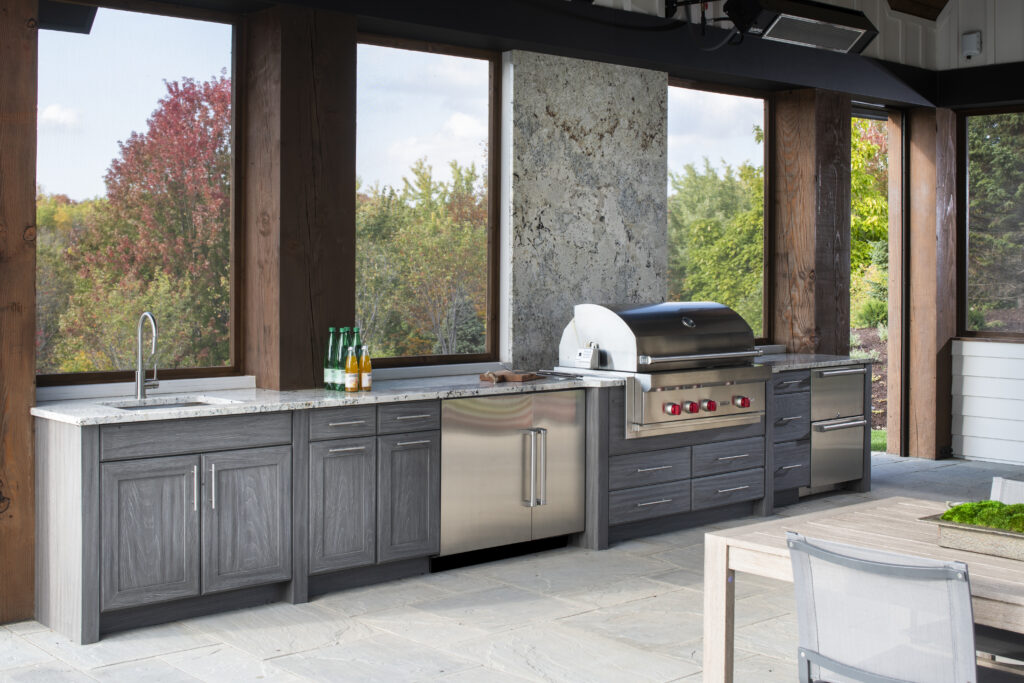
Temperature fluctuations also play an important role in how materials age. Throughout the year, materials repeatedly expand and contract as temperatures rise and fall, placing stress on joints, fasteners, and adhesives. While these changes may seem minor on a daily basis, they can eventually lead to cracks, warping, and premature failure. For waterfront properties, where materials are subjected to these conditions year-round, durability is every bit as important as aesthetics.
Why Traditional Materials Often Fall Short
Natural wood has long been prized for its warmth and character, but it can become a high-maintenance choice in coastal environments. Continuous exposure to moisture can cause wood to absorb water, leading to swelling, cracking, warping, and eventually rot. Certain metals can corrode surprisingly quickly, and finishes that look beautiful on installation day may begin fading or deteriorating after only a few seasons.
“The cabinetry that looks beautiful on day one also needs to withstand years of sun, rain, humidity, changing temperatures, and, in many cases, chlorine or salt air without losing its appearance or performance,” says Vahrmeyer.
Because of these challenges, designers are increasingly looking beyond appearance and asking more questions about how materials are made and whether they have been engineered specifically for life near the water. A product that performs well inland may not deliver the same results in a coastal setting, making material selection one of the most important decisions in the design process.
Materials Engineered for Coastal Living
As outdoor kitchens have become more sophisticated, manufacturers have developed materials designed to withstand harsh environmental conditions while maintaining the look and feel homeowners want. Porcelain countertops have become a popular choice because they are non-porous, highly resistant to staining, and UV stable. Stainless steel hardware also continues to be widely specified because it offers greater protection against corrosion and moisture exposure.
For cabinetry, many designers are turning to high-density polyurethane resin because it delivers the warmth and texture of natural wood while eliminating many of the maintenance concerns associated with traditional materials.
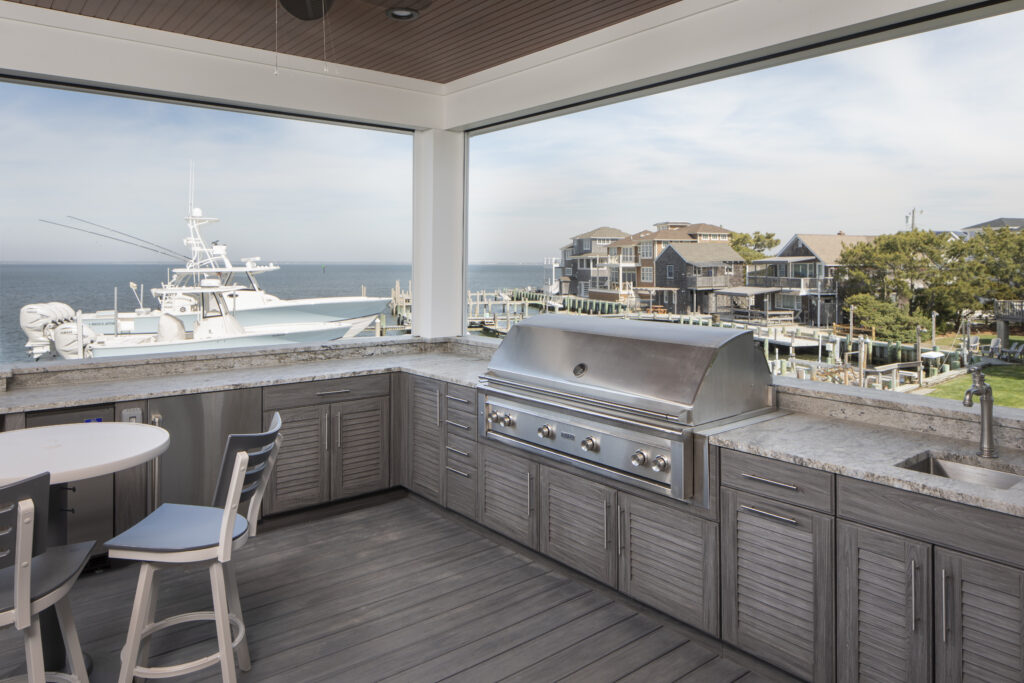
“This is where engineered outdoor materials have a significant advantage,” says Vahrmeyer. “Materials like high-density polyurethane resin remain dimensionally stable, resist moisture absorption, and maintain their appearance despite years of exposure to the elements.”
NatureKast’s cabinetry is molded from hand-selected wood masters to replicate the depth and character of natural woodgrain and then individually hand-finished to create an authentic appearance. The result is cabinetry that offers the visual appeal of fine wood while delivering the weather-resistant performance required for life by the coast.
Designing for Longevity
Creating a successful waterfront kitchen involves far more than choosing the right products. The most durable spaces are thoughtfully designed to work with their environment. Shade structures can reduce direct sun exposure and help preserve finishes, while proper drainage prevents water from collecting around cabinetry and appliances. Ventilation, prevailing breezes, and the orientation of the kitchen can also influence how materials perform over time.
“We encourage homeowners to think beyond the products themselves,” says Vahrmeyer. “The best projects consider the entire environment from the very beginning.”
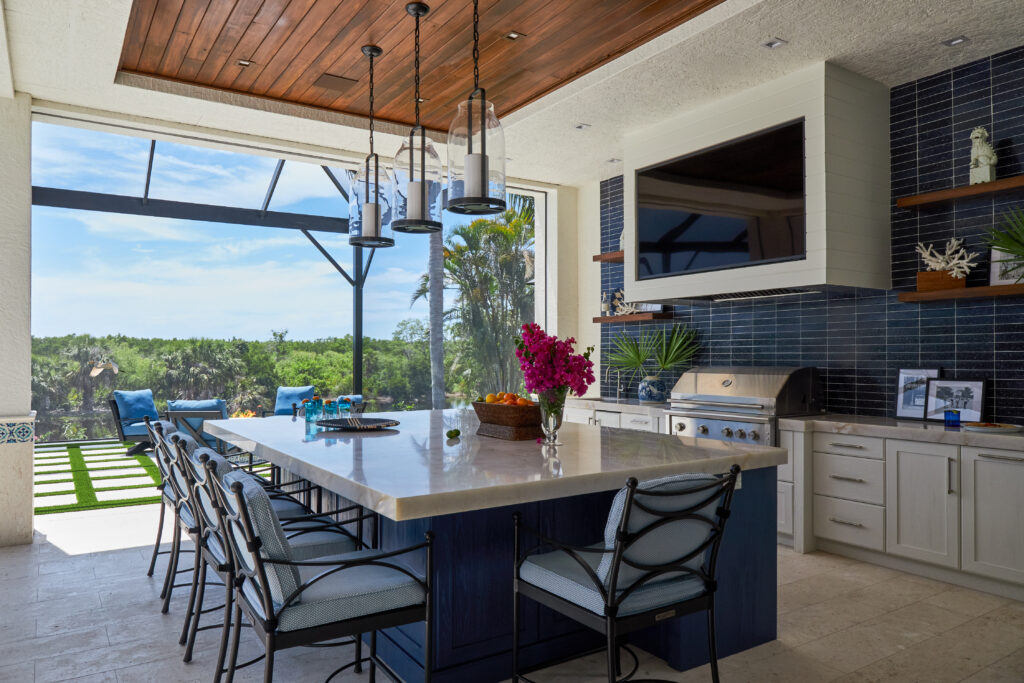
These details may not be the most exciting part of the design process, but they can significantly extend the life of an outdoor kitchen and reduce maintenance demands over the long term. The goal is to create a space that remains comfortable, functional, and beautiful despite the challenges of a coastal setting.
Outdoor Kitchens Have Become a Long-Term Investment
Outdoor kitchens have evolved from simple grilling stations into fully realized living spaces complete with refrigeration, bars, dining areas, and custom cabinetry. Homeowners are using these spaces more frequently and investing more heavily in their design and construction. As expectations have increased, so has the demand for materials that deliver the same level of craftsmanship, comfort, and longevity found inside the home.
“They’re investing more, using these spaces more often, and expecting the same level of craftsmanship, comfort, and longevity they enjoy indoors,” says Vahrmeyer. “Today’s outdoor kitchens demand both beautiful design and weatherproof performance.”
For waterfront homeowners, selecting materials engineered specifically for coastal living is one of the smartest investments they can make. A well-designed outdoor kitchen should encourage gathering and entertaining, not become a source of ongoing maintenance and repairs. By carefully considering how materials will perform in the face of salt, humidity, and sun, homeowners can create outdoor spaces that are every bit as enduring as the views that surround them.