
Some luxury homes impress because of their scale. Others stand apart because of their history. In Honolulu, a newly listed estate manages to do both.
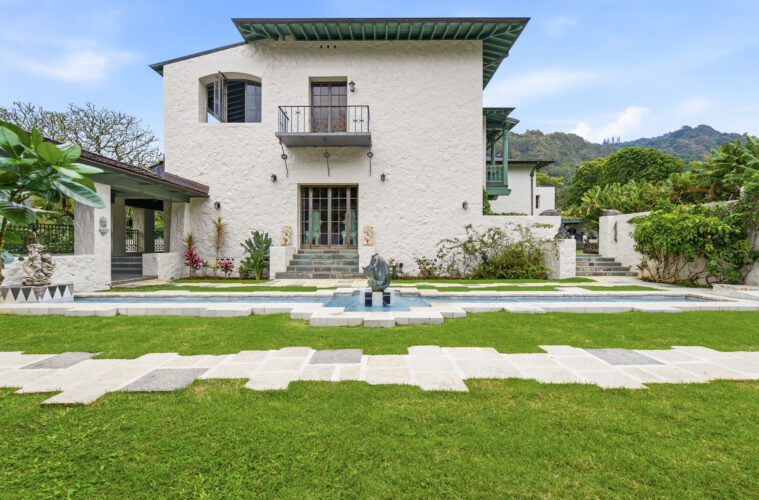
Known as Lihiwai, a remarkable 1929 residence tucked within Honolulu’s upper Nuʻuanu Valley, the historic property has entered the market for $22 million, represented by Jovanna Giannasio-Fern of Hawaiʻi Life. Spanning 24,899 square feet across three separate structures, the estate includes six bedrooms and nine bathrooms and remains one of Hawaiʻi’s most architecturally significant private residences.
The National Register of Historic Places has described Lihiwai as likely the largest and finest private residence ever constructed in Hawaiʻi, a distinction that has remained attached to the estate since 1982.
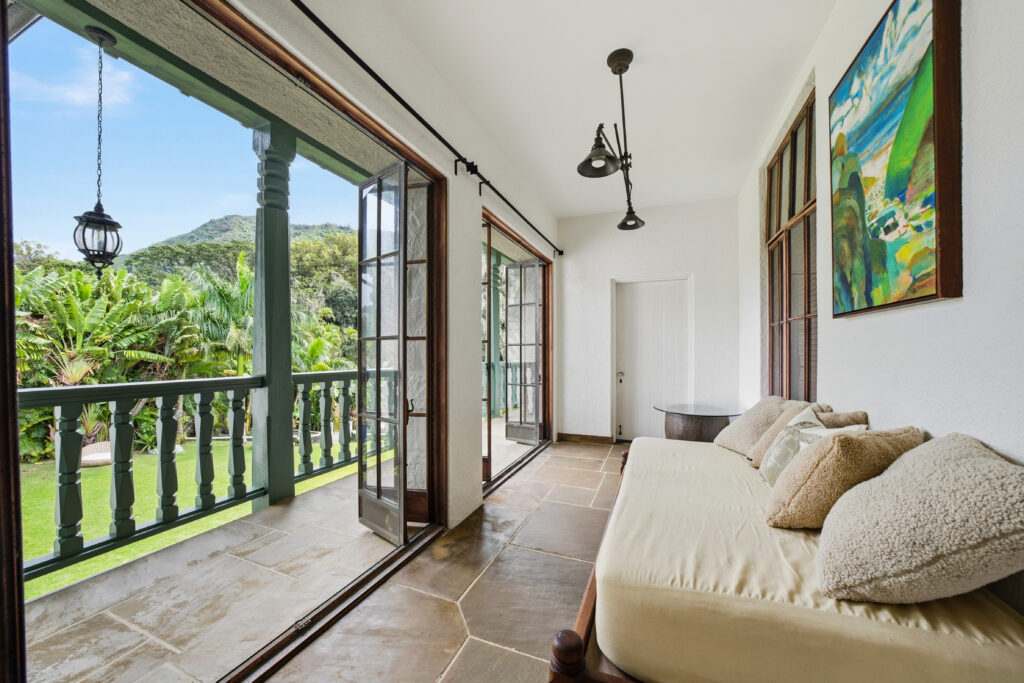
Commissioned in the early 1920s by Territorial Governor George Robert Carter and completed in 1929, the estate reflects Hawaiʻi’s architectural golden age. Its design came from Hardie Phillip of Bertram Grosvenor Goodhue & Associates, the renowned architectural firm behind many of America’s most celebrated civic buildings during the early twentieth century. At Lihiwai, that same monumental design philosophy was applied to a private residence on an extraordinary scale.
The home’s historical significance extends well beyond architecture. Governor Carter was appointed by President Theodore Roosevelt and descended from Dr. Gerrit P. Judd, a physician and statesman who played a central role in securing international recognition of Hawaiian sovereignty during the Kingdom era. Carter’s wife, Helen Strong Carter, was the daughter of Henry A. Strong, founding president of Eastman Kodak, creating an unexpected connection between the estate and one of America’s defining industrial legacies.
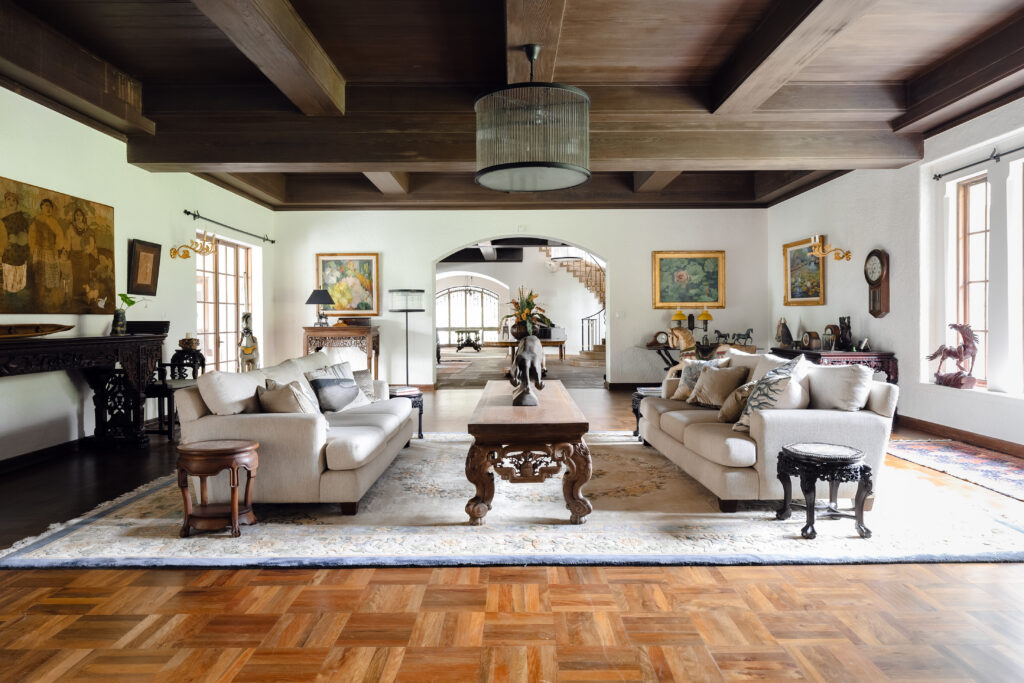
What distinguishes Lihiwai physically is the extraordinary level of construction rarely seen in residential architecture. Exterior perimeter walls measure between two and three feet thick, while structural end walls approach nearly six feet. The residence was constructed using shaped bluestone embedded in steel-reinforced concrete, specifications more commonly associated with institutional buildings than private homes.
Water remains central to both the estate’s design and identity. Lihiwai translates to “water’s edge,” and historic ʻauwai irrigation channels, part of Hawaiʻi’s early agricultural infrastructure, were integrated into the landscape design. These channels now feed reflecting pools anchored by a traditional Chinese moon gate before descending through terraced garden spaces toward a natural basin connected to Nuʻuanu Stream.
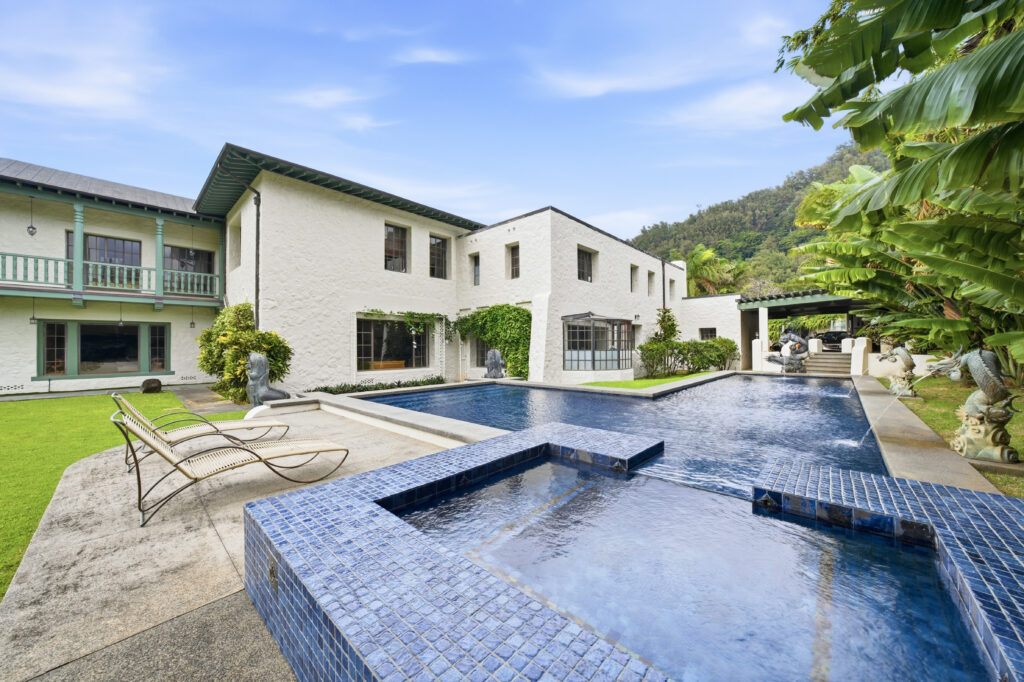
The current owner, Honolulu builder Richard J. Ethington of RJE Construction Services, has invested approximately $13 million into a careful restoration and modernization effort that prioritized preservation over reinvention.
“Our responsibility was never to reinvent the house, but to listen to it,” said Victor Weeks, principal designer at Welch & Weeks, who oversaw the restoration. “The architecture carries a clarity of intent and civic presence that demanded restraint rather than intervention. The home holds an important place in Hawaiʻi’s history, and that legacy guided every decision.”
Reflecting Spanish Colonial Revival architecture throughout, Lihiwai remains one of the rare private residences in Hawaiʻi where historical importance, craftsmanship, and scale converge in a way unlikely to be replicated today.
For buyers seeking more than ocean views and luxury finishes, this estate offers a piece of history itself.
Listed by: Jovanna Giannasio-Fern, Hawaiʻi Life
Price: $22 million
Location: 51 Kepola Place, Nuʻuanu, Honolulu, Hawaiʻi
Details: 6 bedrooms, 9 bathrooms, 24,899 square feet across three structures