

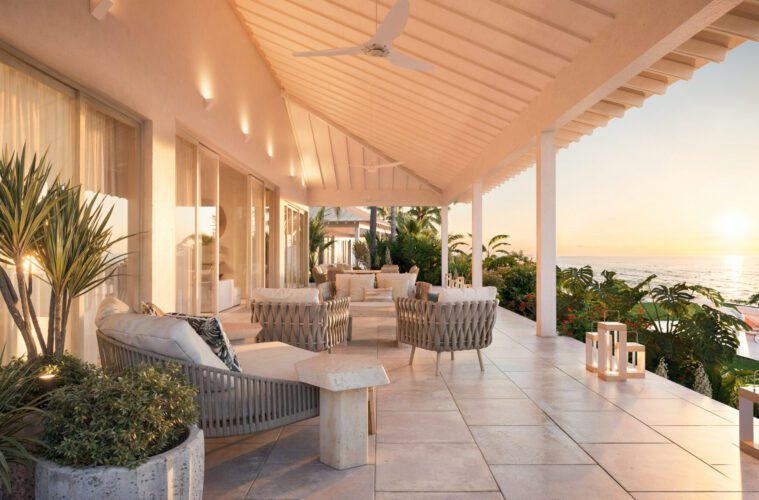
Few spaces capture the essence of luxury coastal living quite like an outdoor living room overlooking the water. More than simply a collection of comfortable furniture on a terrace, these thoughtfully designed environments have become true extensions of the home, offering places to relax, entertain, dine, and reconnect with nature without sacrificing comfort.
What distinguishes today’s best outdoor living rooms is their ability to perform throughout the year. Rather than creating seasonal spaces that sit empty for months, architects and designers are incorporating features that provide shade during the summer, warmth on cool evenings, protection from coastal winds, and flexibility for changing weather conditions. The result is an outdoor environment that feels every bit as inviting as the home’s interior while celebrating uninterrupted views of the ocean.
Comfortable Seating Sets the Tone
Every successful outdoor living room begins with carefully selected seating that encourages people to linger. Deep sofas, oversized lounge chairs, upholstered sectionals, and swivel chairs arranged around a central gathering space create an atmosphere that feels welcoming without appearing overly formal.
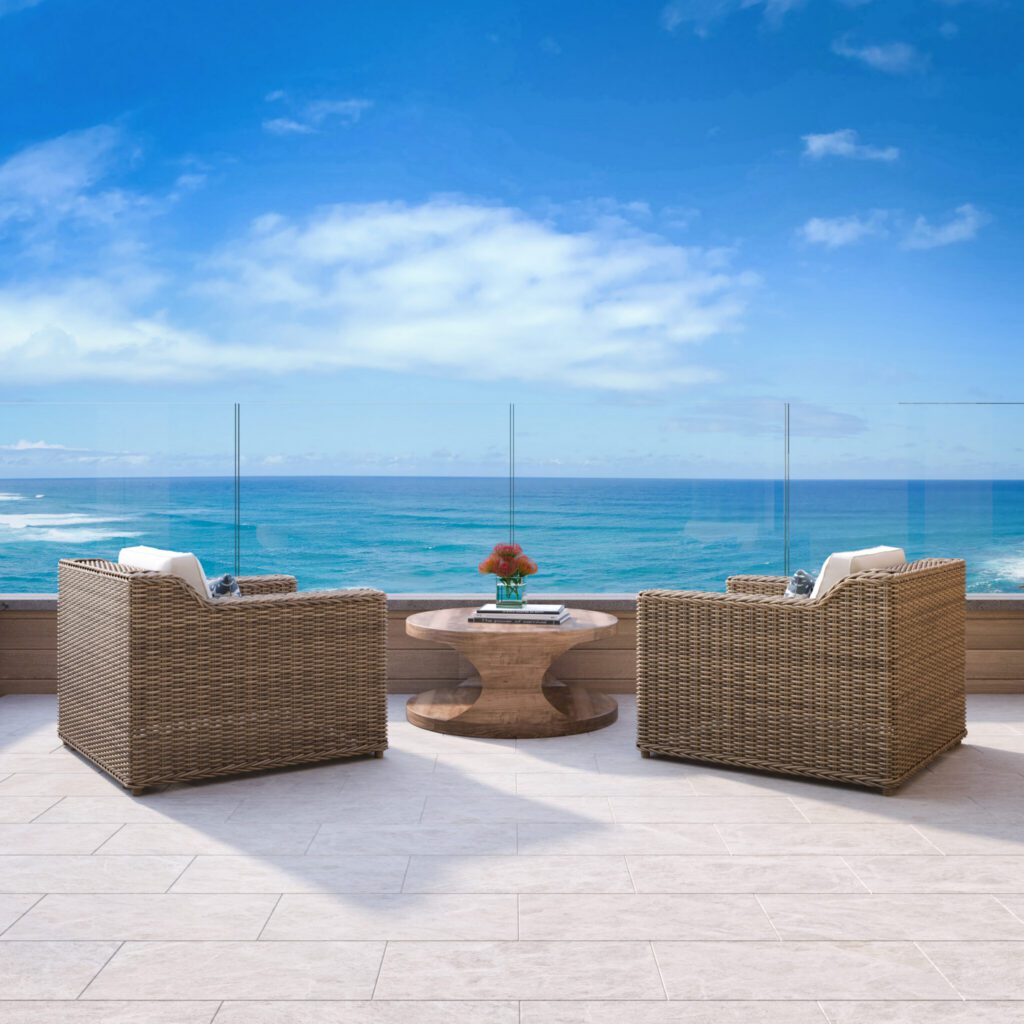
Performance fabrics have dramatically expanded design possibilities. Today’s luxury textiles resist fading, moisture, mildew, and salt air while offering the softness and visual richness once reserved for indoor furnishings. Designers are embracing layered neutrals inspired by sand, driftwood, limestone, and weathered teak, then introducing color through pillows, artwork, and accessories that reflect the surrounding landscape.
Flexible seating arrangements also allow homeowners to accommodate everything from quiet mornings with coffee to large gatherings that continue long after sunset.
Shelter Without Sacrificing the View
Creating an all-season outdoor room begins with protection from the elements. Covered terraces, deep roof overhangs, pergolas, and thoughtfully positioned pavilions provide welcome shade while maintaining an open connection to the surrounding landscape.
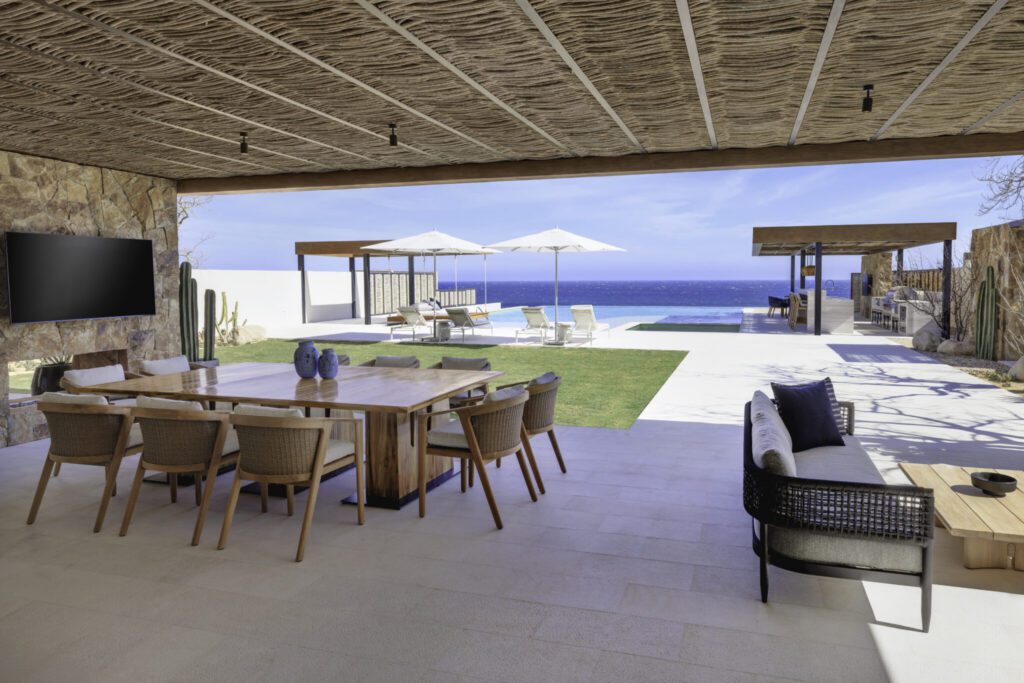
Many waterfront homes now incorporate retractable screens and motorized shades that can be adjusted throughout the day. These systems reduce glare, soften afternoon sun, provide additional privacy, and help block coastal breezes when weather conditions change. Glass walls and large openings further blur the transition between indoors and out, allowing the outdoor living room to function as part of the home’s overall floor plan.
The goal is not to separate occupants from nature, but rather to make spending time outside comfortable regardless of changing conditions.
Fire Features Extend the Evening
A thoughtfully designed fire feature transforms an outdoor living room from a daytime destination into a gathering place that remains inviting well after sunset. Linear fireplaces, sculptural fire pits, and contemporary fire tables create warmth while introducing a natural focal point around which seating can be organized.
Unlike traditional backyard fire pits, many luxury coastal homes integrate fire features directly into covered living spaces or position them to frame water views. The flickering flames create visual interest throughout the evening while balancing the cool breezes that often accompany waterfront locations.
Fire features also contribute to the layered lighting strategy that distinguishes professionally designed outdoor environments. Combined with architectural lighting, landscape illumination, and subtle accent fixtures, they create spaces that feel intimate without overwhelming the surrounding scenery.
Outdoor Kitchens Bring Everyone Together
Outdoor living rooms increasingly connect seamlessly to fully equipped kitchens that encourage homeowners to spend entire afternoons and evenings outside. Rather than isolating the cook, these open layouts allow food preparation, conversation, and entertaining to happen simultaneously.
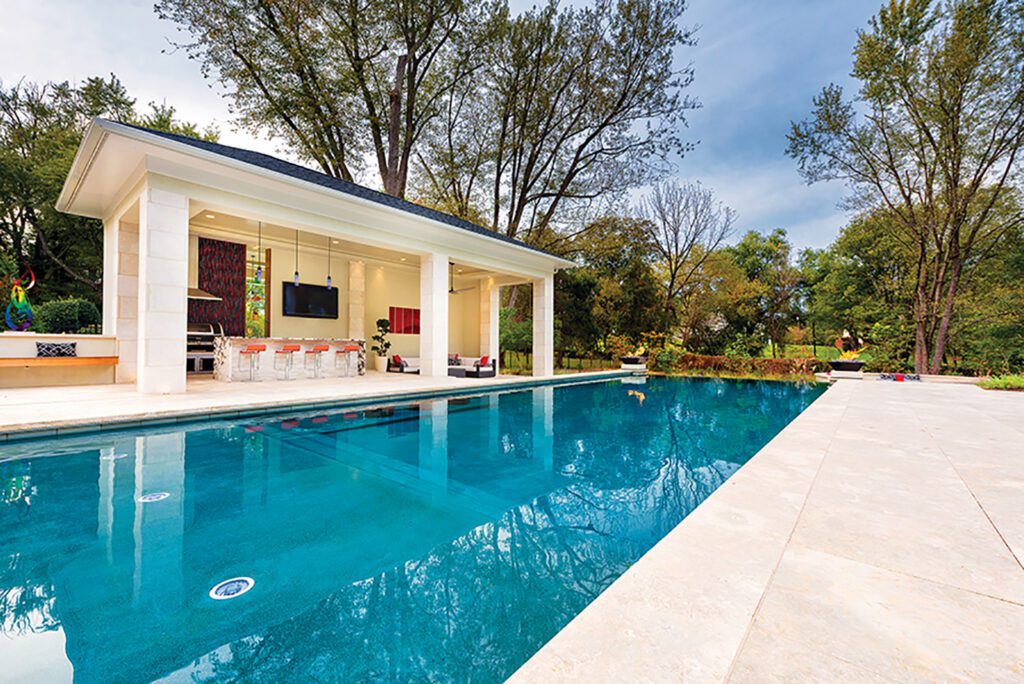
Luxury outdoor kitchens now commonly include refrigeration, beverage stations, wine storage, ice makers, pizza ovens, smokers, generous prep areas, and expansive countertops that accommodate both casual meals and elaborate gatherings. Dining tables positioned nearby create an effortless flow between cooking, serving, and relaxing.
In waterfront homes, these kitchens are often positioned to maximize views while remaining sheltered from prevailing winds, allowing them to function comfortably throughout much of the year.
Materials Built for Coastal Conditions
Designing beside the ocean requires careful material selection. Salt air, humidity, intense sunlight, and occasional storms demand finishes that remain beautiful while standing up to challenging environmental conditions.
Natural stone, porcelain pavers, architectural concrete, sustainably sourced hardwoods, powder-coated aluminum, marine-grade stainless steel, and high-performance composites continue to dominate luxury coastal projects because they balance durability with refined aesthetics.
Designers also favor materials that age gracefully. Weathered teak develops a soft silver patina, limestone acquires additional character over time, and natural stone often becomes more visually compelling as it responds to the surrounding environment. Rather than fighting nature, these materials embrace it.
Bringing the Indoors Outside
Today’s most successful outdoor living rooms borrow many of the design principles traditionally associated with interior spaces. Layered lighting, custom rugs, artwork, sculptural accessories, built-in cabinetry, and carefully selected greenery help create an atmosphere that feels curated rather than simply furnished.
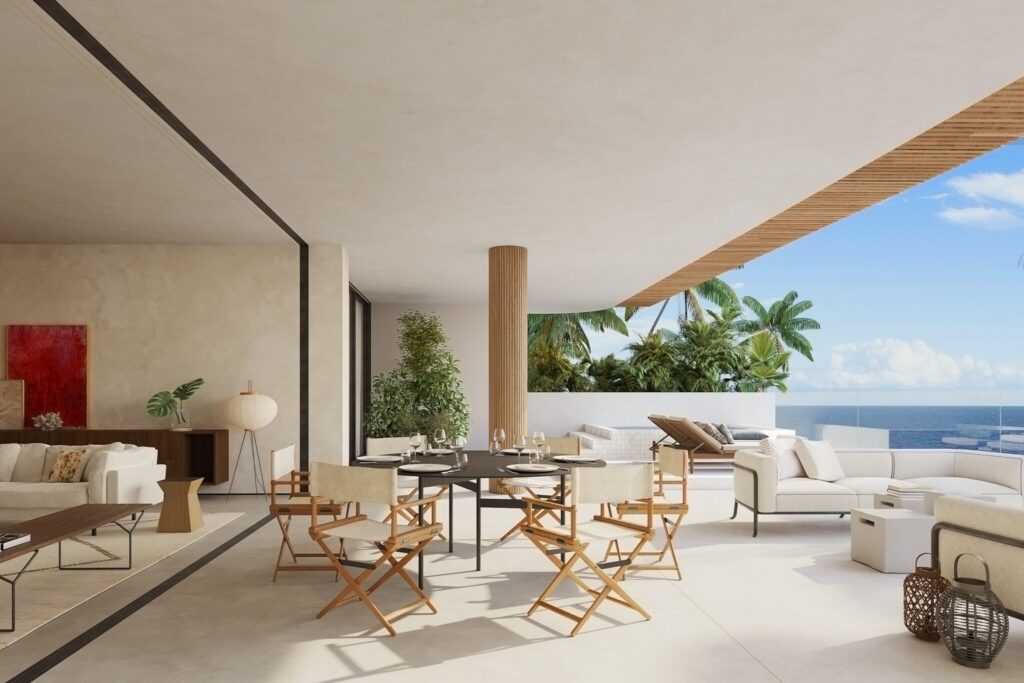
Ceiling fans improve comfort during warmer months, while integrated audio systems provide entertainment without dominating the experience. Large planters soften architectural lines, and textured finishes add warmth to contemporary designs that might otherwise feel overly minimal.
By incorporating familiar residential elements, designers create outdoor spaces that invite homeowners to settle in for hours rather than simply passing through.
Wellness by the Water
Wellness has become an increasingly important consideration in luxury home design, and outdoor living rooms naturally support many of its core principles. Access to fresh air, natural light, calming water views, and comfortable gathering spaces encourages homeowners to spend more time outside while reducing reliance on enclosed interior rooms.
Some residences extend these wellness benefits by incorporating adjacent yoga terraces, meditation gardens, outdoor showers, cold plunge pools, or spa areas that connect directly to the primary outdoor living space. Even relatively simple additions, such as comfortable chaise lounges positioned to capture sunrise views or shaded reading nooks overlooking the water, contribute to a more restorative environment.
Rather than serving a single purpose, these outdoor rooms support relaxation, conversation, exercise, and quiet reflection throughout the day.
A Natural Extension of Coastal Living
The finest oceanfront homes no longer treat outdoor living as an afterthought. Instead, expansive terraces, covered lounges, outdoor kitchens, and thoughtfully designed gathering spaces are planned alongside the home’s interior from the earliest stages of design.
That integrated approach allows every room to take advantage of natural light, sea breezes, and spectacular waterfront views while giving homeowners the flexibility to live comfortably outdoors through changing seasons. Whether overlooking the Atlantic, the Pacific, the Gulf, or a quiet coastal inlet, these all-season outdoor living rooms reflect a broader shift in luxury residential design: creating homes that celebrate their surroundings while making everyday life feel just a little more like a vacation.