

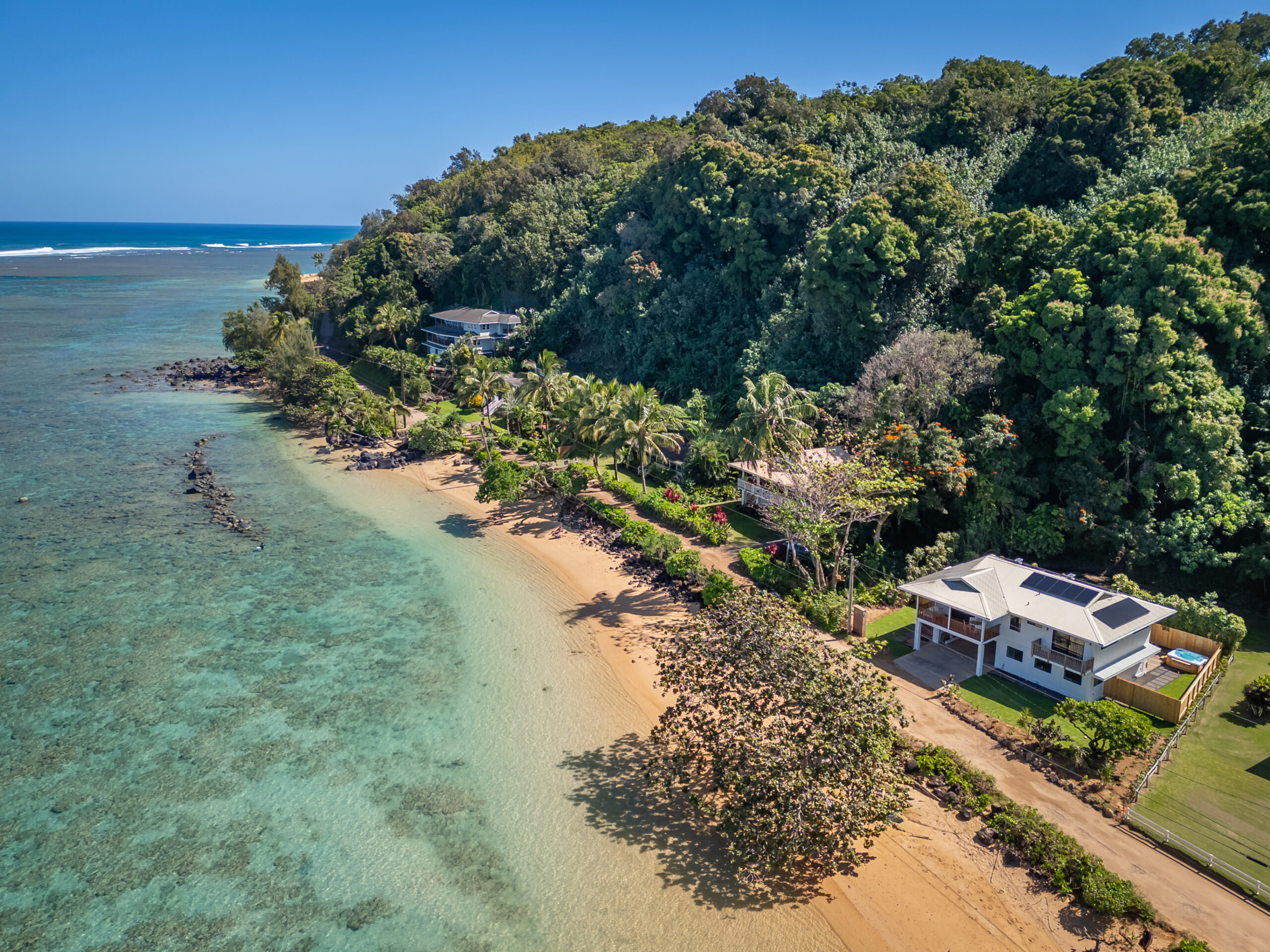
Ask an experienced coastal builder about salt, humidity, wind, or water and you will hear specifications, not alarm. Here is what the environment does to a house, and how good homes prepare for it.
Coastal homes face forces that inland houses rarely experience at the same intensity: salt, reflected sun, humidity, wind, sand, flooding, and erosion. None is mysterious. Each has known effects and proven responses. The difference between a home that ages gracefully and one that begins failing early is whether those responses were designed in from the start.
Salt Air
Salt is the defining condition of coastal ownership. Airborne salt settles on every exterior surface and goes to work on anything metallic: railings, fasteners, light fixtures, window hardware, the HVAC condenser behind the house. On an unprepared home, corrosion can appear surprisingly early and accelerate quickly once coatings or finishes begin to fail.
How the best homes prepare: Material selection does most of the work before the house even exists. The specification may call for marine-grade stainless steel, appropriately coated or galvanized hardware, and metals chosen for both corrosion resistance and compatibility with the materials around them. That may mean powder-coated aluminum for railings and fixtures instead of unprotected ferrous metal. Coastal-rated HVAC equipment with protective coil coatings, a line-item detail that extends the service life of one of the property’s most expensive mechanical systems. And the simplest preparation of all is a habit: a scheduled freshwater rinse of exposed metal and glazing, clearing the salt film before it establishes. The homes that look composed at year ten are the ones where this is routine.
Sun
Reflected light off the water increases the exposure of exterior finishes and interiors. Over time, UV degrades paints, sealants, fabrics, flooring, and other materials. Dark colors on southern and western exposures take the worst of it, and flooring, artwork, fabrics, and furnishings fade behind ordinary glass.
How the best homes prepare: Coastal-grade finishes exist for exactly this. High-performance exterior paints and stains formulated for UV, applied on a recoat schedule rather than after failure. Cladding that does not depend on a film to survive: fiber cement, brick, stone. Deep overhangs and exterior shading that protect the wall assembly and the rooms behind it. Glazing selected for solar control and UV reduction protects interiors, and laminated assemblies can add UV filtration, safety, or impact performance depending on the specification. And in some of the best coastal architecture, no fight at all, which brings us to the gray shingle. More on that below.
Humidity
Coastal air carries moisture, and the damage usually develops slowly. Humidity finds wall cavities, mechanical rooms, and closed closets, contributing to the problems owners often notice last: musty rooms, swollen trim, corroded electronics, and mold where air does not circulate.
How the best homes prepare: Moisture control is a designed system in a serious coastal build, not an afterthought. HVAC sized for the climate, and in humid regions, dedicated dehumidification to keep interior moisture under control even when cooling demand is low. Bath and mechanical ventilation that actually exhausts outdoors. Envelopes detailed with drainage planes and rainscreen assemblies, so the water that gets behind cladding, and some always does, drains and dries instead of dwelling. In the rooms that live wet, baths, laundry, the mudroom off the beach, materials selected to tolerate moisture and frequent cleaning: tile, stone, and properly finished cabinetry designed for humid conditions.
Wind and Sand
Open coastal sites are often more exposed to wind than inland properties. During storms, that exposure becomes a structural concern. Between storms, wind-driven sand steadily accelerates wear: it wears finishes, can etch exposed glass, and collects in tracks, hinges, and latches, impairing their operation.
How the best homes prepare: For the daily grind, robust cladding, hardware chosen to be serviceable where wear concentrates, and landscape doing quiet defensive work: preserved dunes, windbreak planting, hardscape placed to break the wind’s run at the house. For storm wind, engineering: impact-rated glazing and protected openings designed to resist windborne debris, a continuous load path tying roof to foundation, roof systems rated for the local wind zone. We covered that structural system in depth in our guide to beach houses on stilts, and the two subjects are really one: a home specified for the wind it actually lives in.
Water
The ocean’s most serious moves are the rare ones. Storm surge and coastal flooding can produce catastrophic losses, while erosion changes the site itself over a much longer period. Coastal risk changes over time, and current flood maps do not necessarily describe what a site may face over the life of the house.
How the best homes prepare: Elevation first, in the zones that call for it: living space elevated above the required flood level and supported on piles engineered for the site. Flood-resistant materials and breakaway construction at ground level. Utilities and mechanicals raised out of the flood plane. Site work that respects the dune system, the natural infrastructure protecting everything behind it. And preparation extends to the purchase itself: the erosion history of that specific stretch of shoreline, current flood maps, local erosion history, and credible projections for future flooding and sea-level rise are as much a part of the home as the floor plan.
When the Environment Becomes the Style
Here is the part that separates coastal architecture from architecture that happens to be near the coast. The most beloved looks in seaside building were not designed in spite of these forces. They were shaped by them.
The New England Gray
The silvered cedar shingle of Nantucket, the Cape, and the Vineyard is the most famous example in America. White cedar starts warm and honey-toned, and salt air and sun weather it to that soft driftwood gray. Left unfinished, cedar could weather without the recurring maintenance required by painted cladding. It started as a practical decision about upkeep. The surrender became the signature. The weathered-shingle appearance is now so closely associated with these communities that local historic review and contemporary design frequently preserve it intentionally, and new construction is often designed to silver on purpose. The environment did the styling. The architecture just agreed.
Bermuda’s White Roofs
Bermuda’s stepped, whitewashed roofs are preparation wearing a disguise. Their profiles channel rainwater toward gutters and storage tanks, an essential system on an island historically dependent on roof-caught water. The white finish also reflects the intense sun. One of the world’s most recognizable rooflines is, at its core, infrastructure.
The Bahamian Shutter
Those louvered, top-hinged shutters seen across the Caribbean and the Florida Keys combine shade, ventilation, and privacy. When properly engineered and secured, they can also protect openings during storms. They read as charm now. They were equipment first.
The Quiet Patinas
Copper roofs, gutters, and lanterns may develop patina more quickly near the sea. Teak and ipe decks silver, and unfinished brass loses its original polish. Some of this aging is expected and desirable. Some indicates deterioration. Good coastal design depends on knowing the difference and selecting materials whose weathering can be inspected and managed.
This is worth understanding as an owner, because it reframes the whole subject. The forces in this piece are not simply threats to be managed. Handled well, they are collaborators. The homes that define their coastlines are the ones that let the environment finish the design.
What This Means If You Are Buying
The factors above should reorder how you evaluate an oceanfront property. The questions that matter most are not about the kitchen:
- How is the home elevated relative to current and projected flood elevations?
- What is the documented erosion history of this specific shoreline?
- Are the glazing, hardware, mechanicals, and roof coastal-rated, or inland products living by the sea?
- Does the maintenance history show a rhythm of care, or repairs made only after failures?
- Do insurance availability and premiums indicate risks that are not visible during a showing?
A survey and inspection by professionals who work coastal properties specifically will answer most of this. The premium for that expertise is trivial against what it protects.
The Real Cost of the View
Owning by the ocean costs more than owning inland, in construction, upkeep, and insurance. It is the honest cost of building and living in an unusually exposed environment, and the owners who thrive on the water treat it as part of the design, the same way experienced builders do. The best coastal homes do not ignore the conditions or dramatize them. They are designed around them, from the foundation and envelope to the materials allowed to weather in place. That is why the strongest coastal houses often become more characteristic of their setting over time, not less.