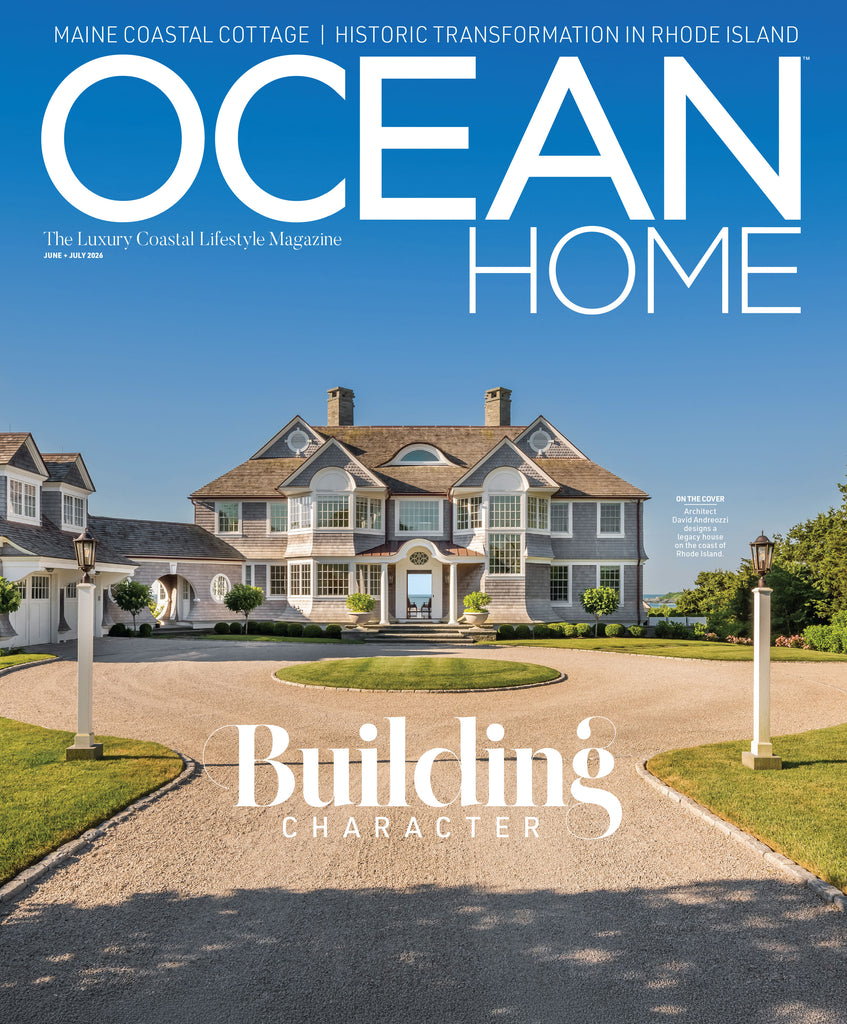

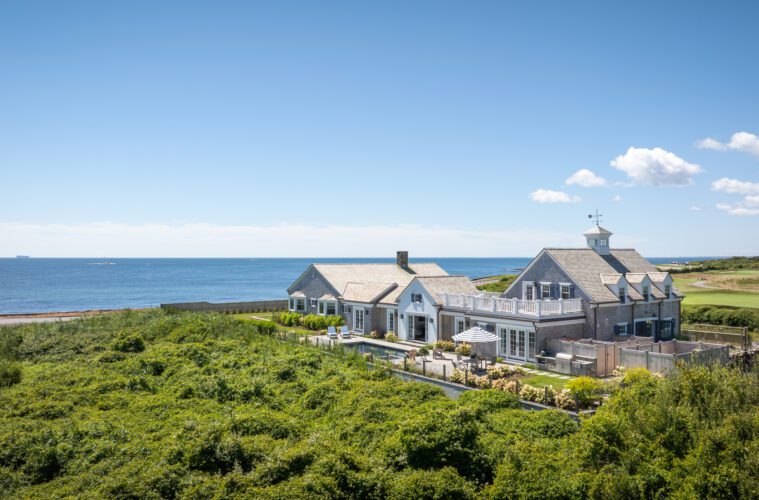
Drive 10 minutes from The Breakers, Newport, Rhode Island’s famous Gilded Age mansion, and you’ll arrive at an understated residence with a distinctive history of its own. Nestled across from the 12th hole at Newport Country Club, with sweeping views of the Atlantic Ocean and surrounded by protected marshland, stands a reinvigorated property known as “Ocean Lodge,” recently transformed through a historically sensitive renovation by Boston-based architect Patrick Ahearn, FAIA
Built in 1938, the house had served as a seasonal retreat for the current owner and his family for about 25 years when he and his wife started contemplating a major renovation to accommodate their growing extended family, including adult children. The project was put to bid with a Request for Proposal (RFP) among multiple architects; the directive was to tear the structures down and build anew. Ahearn felt otherwise: “I wasn’t willing to take on the project if it was a teardown, because I didn’t think it was necessary,” he says. “I felt very strongly about that.” It was a bold move that won him the job.
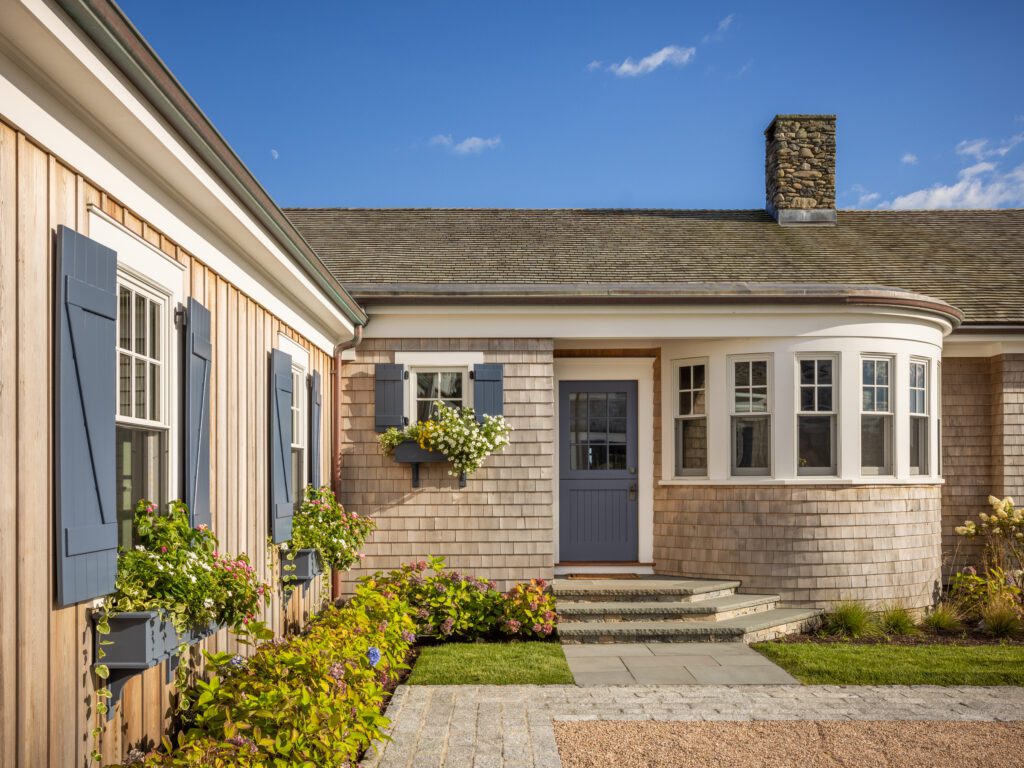
Ahearn’s reputation as something of a house whisperer was on the line, but his vision and confidence—informed by decades of successful historic restorations—prevailed. The challenge, as with many of his projects, was how to modernize the estate without erasing its legacy. “This wonderful little lodge celebrates the history of the family that owns it,” he says. Preserving that spirit while enhancing the home for contemporary living became the guiding principle for both Ahearn and Patti Watson, principal and owner of Taste Design, in Middletown, Rhode Island.
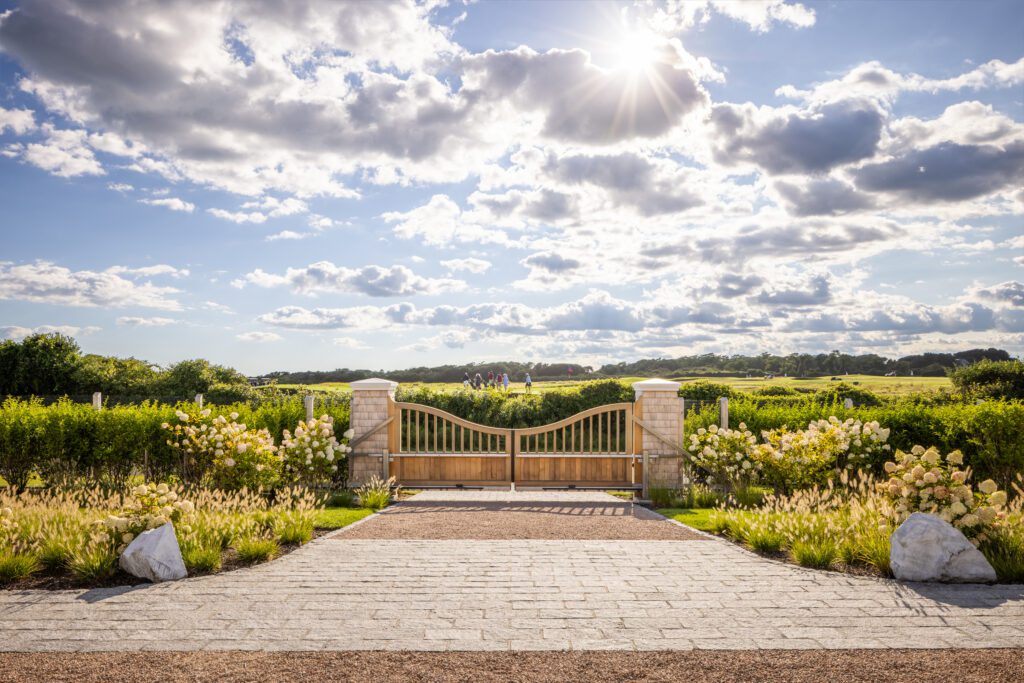
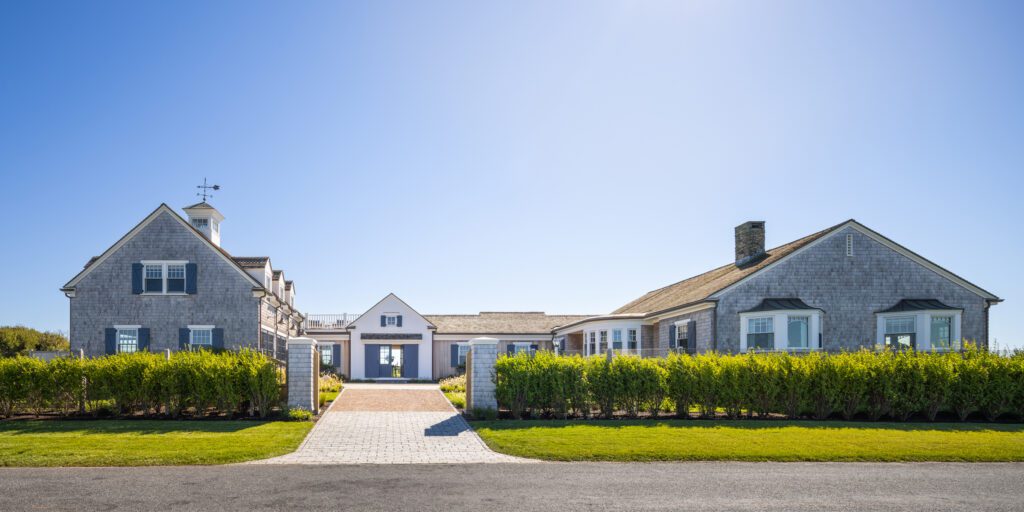
But before Ahearn and Watson could dive into maintaining the aura of the house, some practical issues had to be addressed, most notably the property’s location within a flood zone. The original house and garage were raised about three feet to meet FEMA regulations, and a new, low stone retaining wall was built around the house to preserve the visual relationship between the lawn and the structure. “We very much respected the original character, and we really wanted to be careful about the scale,” asserts Ahearn. The house’s original street-facing, simple facade was subtly refined with the addition of columns framing the classical entry composition, complete with a pedimented gable and fanlight-inspired transom. New cedar shingle cladding and window boxes reinforce the traditional coastal vernacular. Beyond the facade, the property opens into a newly conceived layout, with a stepped-down connector wing linking the lodge to the reimagined carriage house behind it.
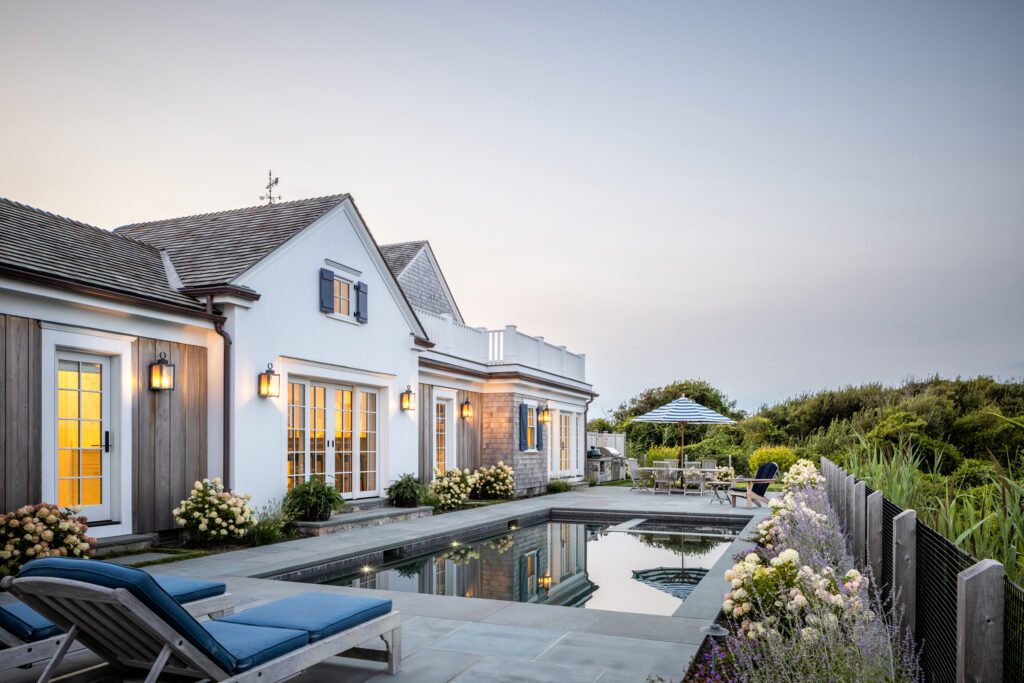
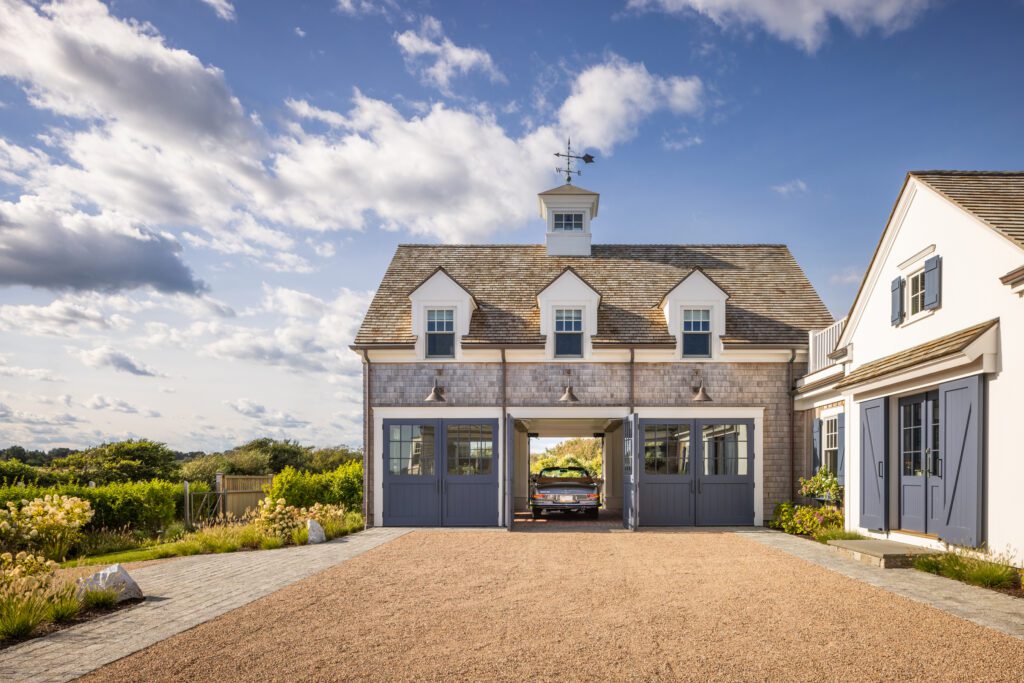
Reorganizing the compound in this way, says Ahearn, proved to be both the project’s biggest challenge and its most transformative gesture in terms of family lifestyle. The new arrival sequence begins at a cobblestoneedged motor court and continues through a white-gabled entrance with blue barn doors that slide open to reveal the brand-new pool beyond. The gabled entryway serves multiple purposes. Explains Ahearn: “It’s the primary entrance to the house in a very casual, beachy way; it opens out to the pool with pocketed doors, and it’s also a cabana with a bar and a TV.” Outside, to the right of the pool is the lodge, and to the left is the three-car carriage house with guest quarters and an office above. From a new second-floor deck accessed through the guest quarters, you get views of the ocean, the golf course, and to the garden and pool.
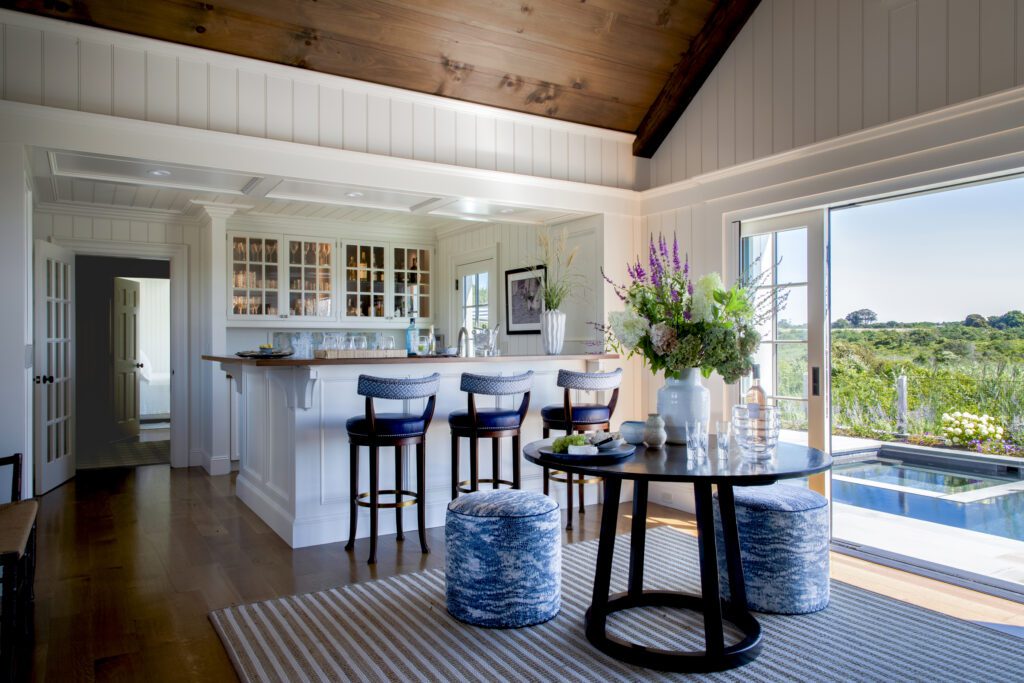
Inside, Watson and her team worked closely with Ahearn and the homeowners to ensure the design narrative carried seamlessly throughout the interiors, from reconfigured room layouts to carefully selected finishes, cabinetry, and furnishings. The goal was to evoke timelessness without pretense, subtly referencing the past while supporting the rhythms of contemporary family life. For example, the existing dark knotty pine “was such a strong design element that we continued it into the new addition, including the bar’s vaulted ceiling,” says Wendi DicelyScalora, senior project manager.
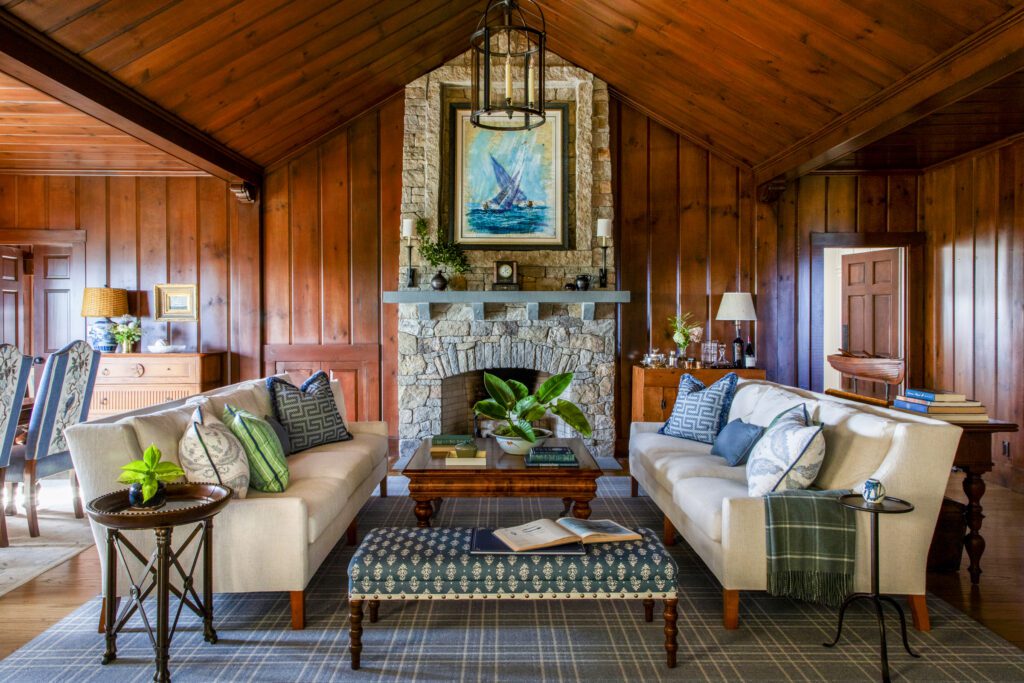
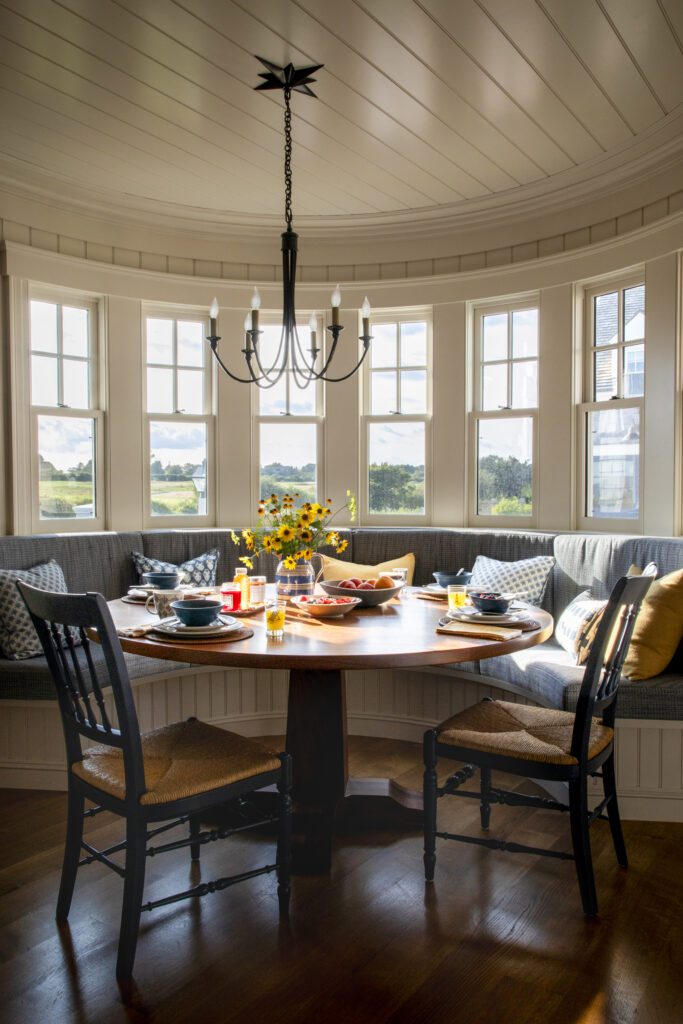
Much of the artwork remains original to the home, while other design elements were thoughtfully updated or reinterpreted, including a curved kitchen banquette inspired by its similarly shaped predecessor. The dining set was repurposed, with the chair backs newly reupholstered. “We ended up using a lot of existing furniture in the house, like the dry sink and chest flanking the fireplace,” says Dicely-Scalora, “but we updated many of the light fixtures.” Like the architecture itself, the interiors feel historically grounded, beautifully livable, and built to endure.
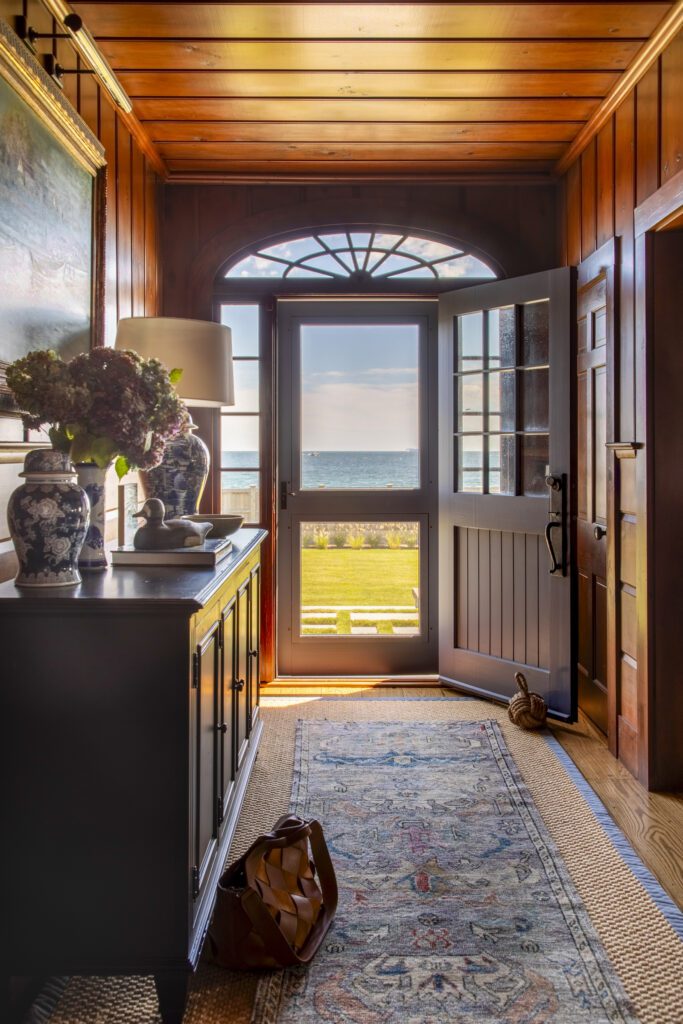
For Ahearn, the story of the house evokes a cinematic nostalgia reminiscent of films like Summer of ’42. “You can imagine what it would be like out on this point surrounded by open land, nestled by the fireplace in the middle of a storm,” the architect recounts. “This notion was really dominant in our thinking, because it’s true; it’s based on real history, not implied history.”
FOR MORE INFORMATION, VISIT